
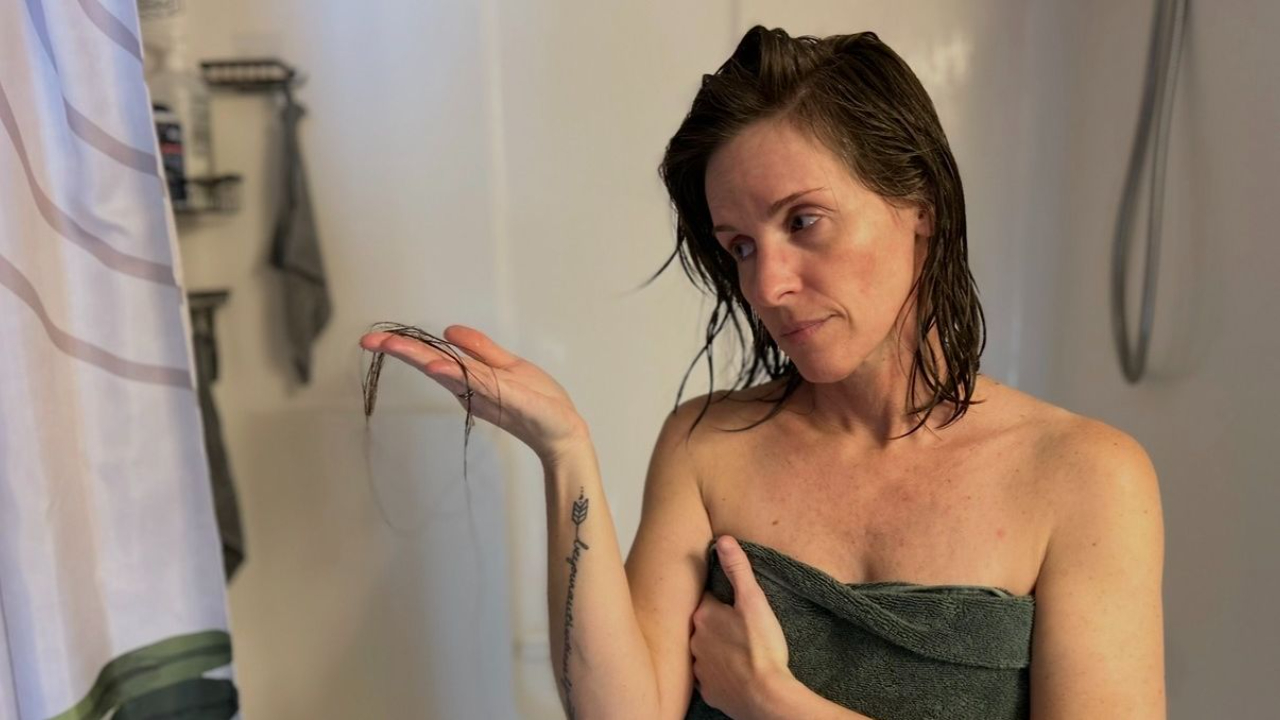
The Loneliness of Looking Healthy
Oct 27, 2026One of the strangest parts of life after cancer is looking healthy.
Because once you look okay, people assume you are okay. The messages stop. The check-ins get further apart. The support that carried you through treatment quietly fades, not because people stopped caring, but because they think you're better. And you're not.
Inside, you're still carrying the fear of recurrence. The anxiety that spikes before every scan. The exhaustion that sleep doesn't touch. The grief for the body and the life you had before. The body image struggles nobody's asking about anymore. The medical trauma still living in your nervous system. The long-term or permanent side effects that don't show up in a before-and-after photo. All of it, still here, just invisible now.
"You're Lucky It Wasn't Worse"
I didn't lose all my hair. Depending on the stage and type of cancer I had, people told me I was lucky. That I looked good "wearing" cancer. That cancer "looked good on me." That's because I looked okay, it was assumed my journey must not have been that bad.
I want to say this as plainly as I can: you can look healthy and good and still be in the thick of having cancer and healing from it. Both things can be true at the same time.
Looking okay was never proof that I was okay. It just meant the hardest parts of what I was carrying didn't have anywhere to show up on the outside.
When the Hardest Part Isn't What You Feel. It's Feeling Unseen
Sometimes the hardest part isn't the fear or the exhaustion or the grief itself. It's feeling like nobody else can see it. It's carrying something enormous while the world around you has already moved on, already stopped asking, already decided the hard part is over.
So you start to question yourself:
"Shouldn't I be over this by now?" "Why am I still struggling?" "What is wrong with me?"
Nothing is wrong with you. This is normal. It's just kept a secret, because looking healthy has become shorthand for being healed, and almost nobody talks about how untrue that can be.
Why This Happens
This isn't a story about people not caring. Most people genuinely do. But most people also take their cues from what they can see. When your hair grows back, when your color returns, when you show up looking like "yourself" again, it reads as the finish line, because that's the only marker most people have to go on. They don't know what's still happening beneath the surface unless you tell them, and even then, it's hard for anyone who hasn't lived it to fully understand what "after" actually holds.
That's part of why this stage can feel so lonely. During treatment, at least the fight was visible, there were appointments to track, a shared language of "getting through it," a clear reason for people to check in. After treatment, the fight doesn't end. It just goes quiet. And quiet fights are so much easier for the people around you to miss.
What's Actually True
Some scars aren't visible. Some recovery isn't obvious. And some of the hardest battles happen after treatment ends, not during it.
If you're in this stage right now, still carrying fear and exhaustion and grief while everyone around you has quietly moved on, I want you to hear this clearly: you are not behind. You are not broken. You are not imagining it. You are in the part of the journey that doesn't get talked about enough, doing work that doesn't come with applause or check-ins, because it doesn't come with visible proof.
You don't have to look sick to still be healing. And you don't have to keep this part a secret just because everyone else assumes you're fine.
Stay connected with news and updates!
Join our mailing list to receive the latest news and updates from our team.
Don't worry, your information will not be shared.
We hate SPAM. We will never sell your information, for any reason.
